

Strategy to Preserve and Expand Contraceptive Access
Read the Updated Strategy Documents
In January 2026, CECA published two newly updated documents, the Strategy to Preserve and Expand Contraceptive Access (“ the Contraceptive Access Strategy”) and the Environmental Scan Describing Contraceptive Access Post-Roe. Together, they can anchor and inform discussions on how access to contraception is shifting in the current environment and what actions can help preserve or advance contraceptive access and sexual and reproductive health equity (SRHE) more broadly. Based on evidence-gathering activities and extensive expert input, we offer:
Strategy to Preserve and Expand Contraceptive Access – In this document, we share streamlined introductory content, refined focus area goals and recommended actions, and an increased focus on examples of work completed or in progress by partners and CECA. We also highlight the transition in title from "Post-Roe" to "the Contraceptive Access Strategy.”
Environmental Scan Describing Contraceptive Access Post-Roe – In this scan, we feature updated context to describe the current U.S. political environment, a new theme on “shifts in contraceptive demand and decision-making,” and a specific call-out on threats to young people’s contraceptive access.
Scroll down to learn more about our approach, available resources, and steps we all can take to preserves and expand contraceptive access.
Background and Approach
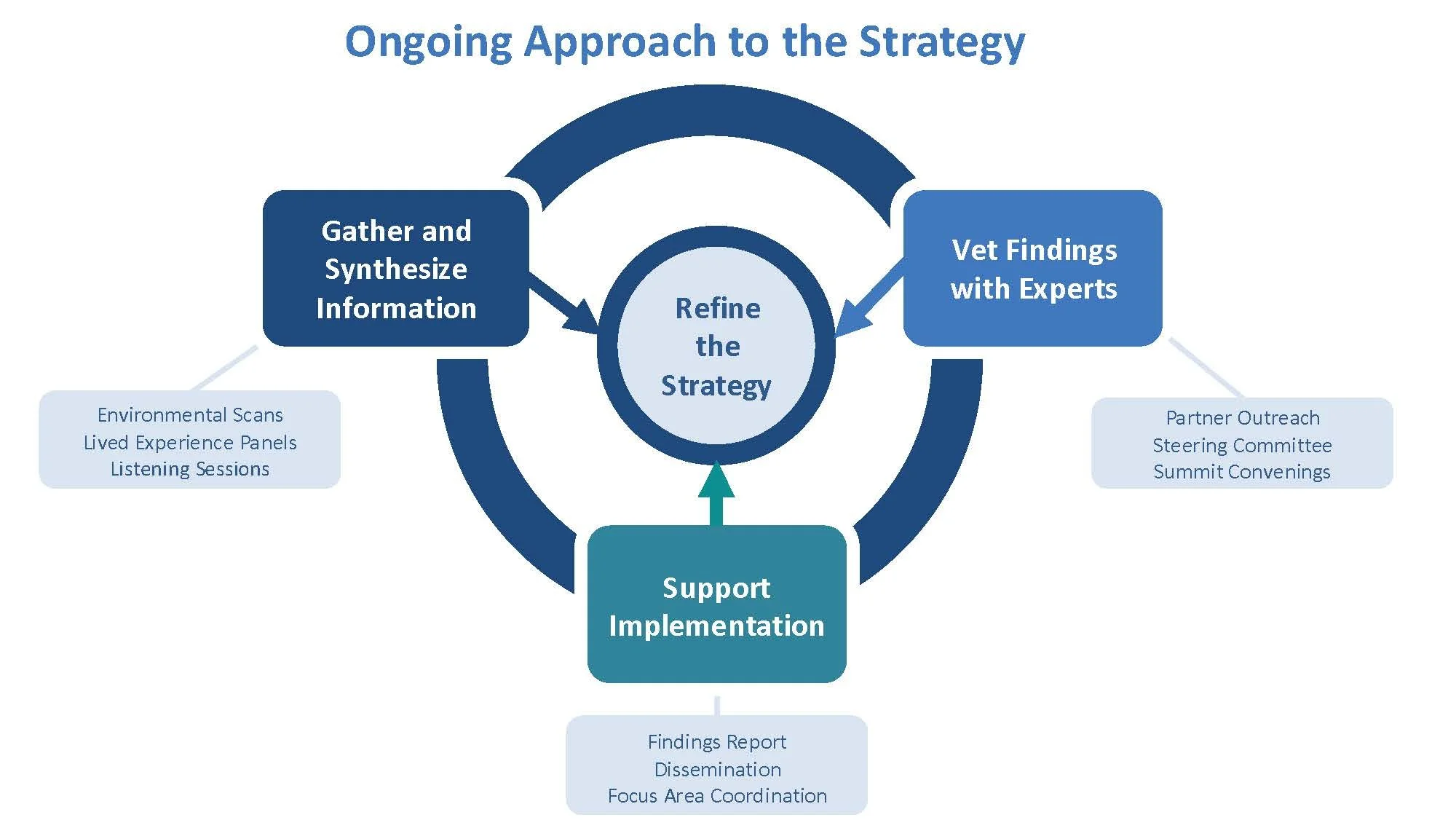
Since 2022, the CECA has brought together evidence and diverse stakeholders to understand the impact of shifts in the sexual and reproductive health landscape, foster strategic collaboration, and improve contraceptive access and sexual and reproductive health equity (SRHE) more broadly. CECA develops and refines the resulting Contraceptive Access Strategy through a cyclical, iterative approach to reflect the current evidence and context. We:
Gather and synthesize information to understand the evolving landscape of contraceptive access and to identify the needs of the field.
Vet findings from the information gathering activities with experts to shape and update the Contraceptive Access Strategy.
Support implementation by synthesizing what we have learned and sharing the Contraceptive Access Strategy with key stakeholders.
The Contraceptive Access Strategy
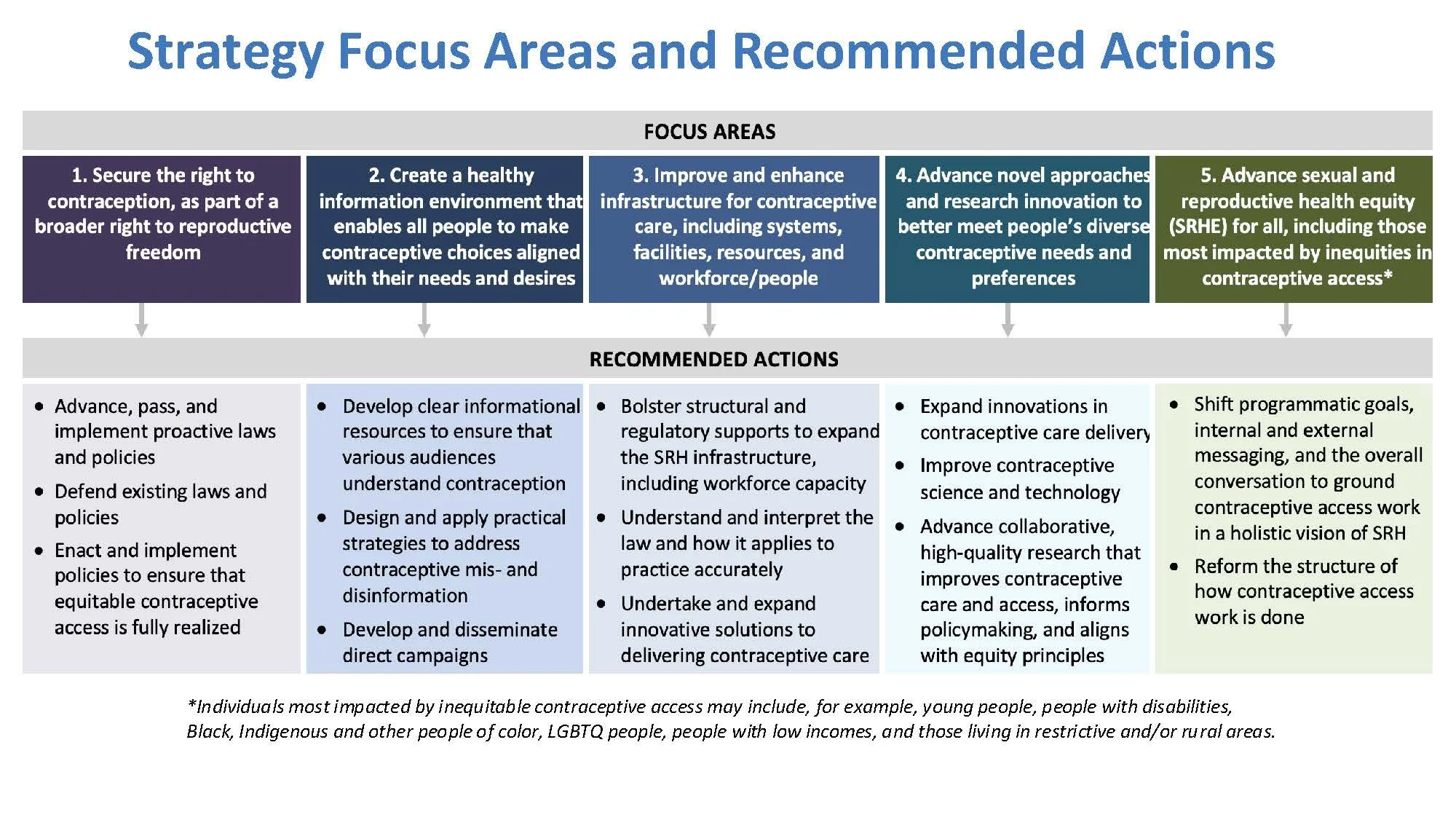
Five focus areas continue to emerge from CECA’s information gathering activities and stakeholder vetting processes:
Secure the right to contraception, as part of a broader right to reproductive freedom.
Create a healthy information environment that enables all people to make contraceptive choices aligned with their needs and desires.
Improve and enhance infrastructure for contraceptive care, including systems, facilities, resources, and workforce/people.
Advance novel approaches and research innovation to better meet people’s diverse contraceptive needs and preferences.
Advance sexual and reproductive health equity (SRHE) for all, including those most impacted by inequities in contraceptive access.
To foster changes, the Contraceptive Access Strategy includes:
Focus areas that define what we aim to achieve and communicate where people should direct their work.
Recommended actions within each focus area to prioritize and move forward now.
Activities underway or completed to help people understand current efforts and place their work in this context. The list of activities presents a sample of the many ongoing efforts in the field and is not meant to be exhaustive.
Vision and Equity-Informed Principles
Defining a vision and principles that uphold equity is especially crucial in sexual and reproductive health given historical and ongoing injustices.
CECA and our partners in this process identified a vision for contraceptive access and equity-informed principles that:
Guide our approach to this work to preserve and expand contraceptive access.
Help align the values and goals of those implementing the Contraceptive Access Strategy.
Support collaboration that leads to more equitable and just contraceptive policies and practices.
Vision for Contraceptive Access
We envision a world where everyone who wants contraception can access person-centered, comprehensive contraceptive information, products, methods, and/or services that work best for them—when, how, and where they want it, free of barriers and bias.
Contraception is part of routine healthcare, and it should be accessible to all people for any reason, not only to prevent pregnancy.
Finally, any approach to contraceptive access must align with the values of reproductive justice; contraception cannot be presented as a remedy to abortion restrictions, as a means to reduce abortion rates, or an alternative to comprehensive sexual and reproductive healthcare access, including abortion care.
Equity-Informed Principles
Ground this work in a holistic vision of sexual and reproductive health that centers justice, equity, autonomy, and choice.
Interrogate and re-evaluate the policies, programs, and practices that have guided us.
Honor and embrace communities as equal partners throughout the process.
Understand and reflect the impact of the historical, sociocultural, political, and economic contexts that influence the lived experiences of community members.
Design a strategy that can impact the lives of individuals and communities through changes in systems, policies, and practice.
Research Priorities to Advance Post-Roe Contraceptive Access
The role of research is especially critical in the current environment, where emerging data and anecdotal evidence already suggest growing inequities in contraceptive access, policies, and service provision.
CECA has identified six research priorities that reflect pressing gaps and needs in contraceptive access research. The list emerged from the findings of the environmental scan and formative discussions with researchers, legal and policy experts, reproductive justice advocates, and private sector partners in the contraceptive access space. This expands upon the needed research identified in CECA’s Priority Roadmap for Policy-Ready Contraceptive Research, published in 2021, and reflects the equity-informed principles for contraceptive access research.
Research Priorities
How have the Dobbs decision and other restrictive SRH policies affected access to, preferences for, use of, and provision of contraception?
What is the extent, nature, and impact of misinformation and disinformation on the public, providers, and policymaking?
What is the current state of the contraceptive care workforce and how has this been affected by Dobbs and subsequent SRH policy restrictions?
What is the impact of new care delivery models on contraceptive access?
What new approaches and technology are needed to meet the contraceptive preferences and needs of all people?
How can person-centered measurement help reflect people’s SRH experiences?
Recommendations and Resources
The Strategy to Preserve and Expand Contraceptive Access- Updated January 2026
This is an evidence-based, collaboratively developed strategy that is both proactive and responsive to the political and public health context in the U.S. The Strategy features five focus areas, recommended actions, and activities underway or completed. CECA updates the Strategy every 1-2 years with additional context and insight.
Environmental Scan - Updated January 2026
This environmental scan summarizes learnings from a range of written materials and expert input on how access to contraception has shifted and may shift further in the post-Roe era. Intended as a living document, CECA update the scan annually with additional data, context, and insight.
Equity-informed Principles – Updated January 2024
This document provides additional detail about the six equity-informed principles that inform the Strategy.
Research Priorities – Updated January 2024
This document provides additional detail on six research priorities that reflect pressing gaps and needs in contraceptive access research in the post-Roe era.